24 Jun
2025
Beyond UCAS: New Routes into UK Medical School for International Students
Applying to UK medical schools is extremely challenging for international students. The traditional UCAS route is fiercely competitive, places for non-UK applicants are very limited, and securing an offer for the medicine course you really want through UCAS is extremely difficult. That's why exploring routes outside UCAS can give international students a more realistic chance of achieving their dream of studying medicine in the UK.
The challenges of the traditional UCAS route
Although the UCAS system is long established, it poses several challenges for international applicants:
Fierce competition: Everyone applying through UCAS is assessed in the same pool, so competition is exceptionally intense, and many academically outstanding students still miss out on an offer.
Lack of flexibility: UCAS applications must meet strict deadlines, and if you miss one, there's no way to put it right.
Limited choices: You can only apply for four medicine courses, so international students have to choose especially carefully and often end up concentrating on prestigious courses that are just as competitive.
Given these challenges, relying on UCAS alone is risky. This is where non-UCAS options offer a viable alternative.
Why are non-UCAS applications worth considering?
Applying for medicine outside UCAS gives international students a valuable alternative:
Wider choice: Unlike UCAS, with its limit of four medical schools, non-UCAS routes let you apply to more medical schools, including private UK institutions and international programmes, giving international students more choices and opportunities.
Flexible admissions: Medical schools outside UCAS usually run rolling admissions, so students can apply at different times of the year. This extra flexibility is especially valuable for students who need more time to prepare or who have missed the UCAS deadline.
Less competition: Competition for non-UCAS programmes is relatively low, so international students find it easier to win a place, especially at newer medical schools or on courses with a global focus. This gives international applicants another realistic route into medicine.
Despite these clear advantages, there are some things students need to weigh up carefully:
Higher costs: Non-UCAS programmes, especially those run by private or international medical schools, tend to charge higher tuition fees, and the extra costs can be substantial too.
Differences in recognition: Degrees from non-UCAS schools may not be automatically recognised in the UK or other countries, and you may need to pass extra exams or gain further accreditation before you can practise. Before applying, check carefully how the degree is recognised and make sure it meets the requirements of the country where you plan to work.
More complicated applications: Non-UCAS routes can involve more complicated application processes, different timelines and varied entry requirements, so you'll need to research and plan thoroughly in advance.
Limited contact with UK students: International students on non-UCAS routes may mostly study alongside other international students and have less exposure to the UK healthcare environment, which could make it harder to settle into the NHS and build a professional network later on.
Medical schools that accept non-UCAS applications
| University | Location | Programme | Entry requirements | Key dates |
|---|---|---|---|---|
| Brunel Medical School | London, UK | 5-year MBBS | AAA; UCAT not required for international applicants | International students can apply through UCAS or directly to the school until 30 June 2027. Direct applications may close early once places are filled, so apply as early as you can. |
| Queen Mary University of London (Malta campus) | Malta | 5-year MBBS | AAA (A in Biology or Chemistry and A in a second science); UCAT, SJT Band 1–3 | Applications open in autumn 2026 and close on 1 March 2027 (September 2027 entry) |
| University of Lancashire (formerly the University of Central Lancashire, UCLan) | Preston, UK | 5-year MBBS | AAA, including Chemistry and another science | Applications open all year round (September entry). |
| University of Buckingham Medical School | Buckingham, UK | 4.5-year MBChB | ABB (including Chemistry or Biology); multiple mini interviews (MMI) | Applications open all year round |
How should you plan your applications?
Applying to medical school takes careful planning, especially if you're considering both UCAS and non-UCAS routes. Here's how to make the most of the process:
1. Early research (May to August)
Choose your target schools: Research the UCAS and non-UCAS medical schools that suit you, comparing their courses, locations and programme structures.
Prepare your application materials: Write your personal statement, arrange your academic references and gather any other documents you need, so you're ready for every application.
2. Submit your applications in parallel (September to October)
Submit your UCAS application: Make sure you complete and submit your UCAS application by 15 October, the key deadline for all medical school applications.
Prepare your non-UCAS applications: At the same time, submit applications through non-UCAS routes, for example to Brunel University or the University of Lancashire (formerly the University of Central Lancashire). Applying early gives you a back-up plan if your UCAS results are uncertain.
3. Keep track of deadlines (October to January)
Watch the timetable closely: Deadlines vary between non-UCAS schools, so pay particular attention to the admissions timetables of schools such as Queen Mary University of London's Malta campus and the University of Buckingham Medical School.
Prepare for interviews: Get ready for interviews at both UCAS and non-UCAS schools so that you don't miss any opportunities.
4. Weigh up your offers and decide (March to April)
Compare your offers: Compare your UCAS and non-UCAS offers, taking into account course content, location, cost and future career opportunities.
Make your final choice: After careful thought, choose the school and programme that best fit your long-term goals.
Conclusion
International students don't have to limit their dream of studying medicine in the UK to the UCAS system. UCAS remains the main route, but non-UCAS options offer a more realistic alternative for international students facing multiple challenges. By planning carefully and exploring several routes, students can tackle the complex application process with more confidence and improve their chances of winning a place.
FAQs
Is there a difference between applying through UCAS and applying outside it? Will my degree be recognised in the same way after I graduate?
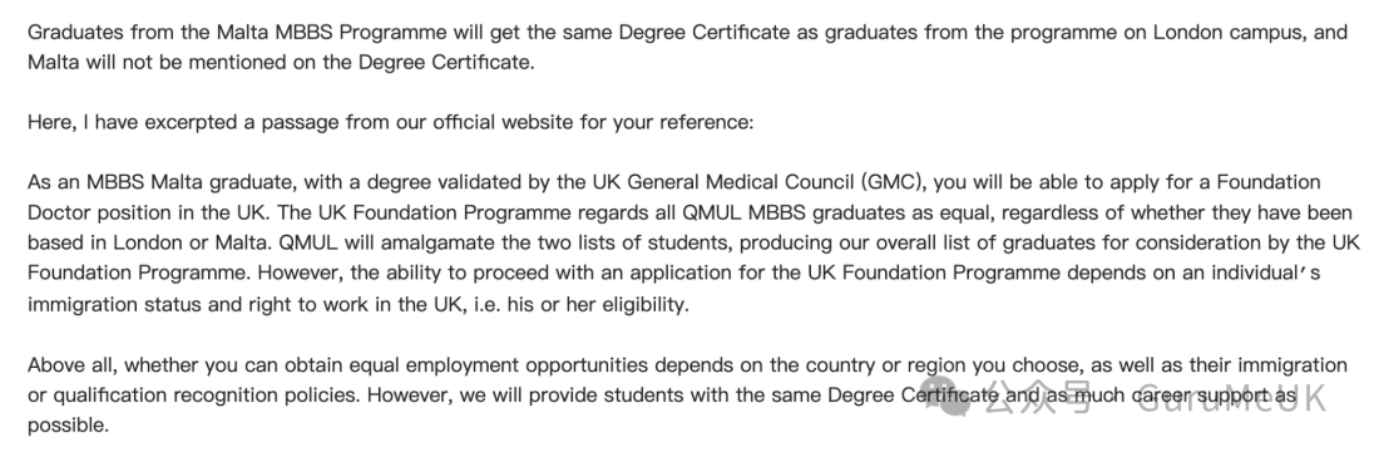
Generally speaking, if a non-UCAS medical school is approved by the UK's General Medical Council (GMC), its graduates have essentially the same career prospects and recognition as students who applied through UCAS. However, because the recognition and accreditation of medical degrees can be complicated, we strongly recommend checking these details directly with the school's admissions office.
Example: Queen Mary Malta